




You've probably come across these testimonials on social media: "I lost 8 kilos in two months thanks to protein!" But what's the reality? Behind the enthusiasm for high-protein diets lies a more nuanced truth, one of scientifically proven benefits but also pitfalls to avoid.
How protein affects your weight
Eat 100 grams of chicken breast and 100 grams of pasta. Your body won't process them in the same way at all. Protein requires 20 to 30% more energy to be digested, compared to only 5 to 10% for carbohydrates. This phenomenon, known as the thermic effect of food, explains why your metabolism works harder.
Beyond this thermic effect, protein profoundly changes your sense of hunger. A study published in the American Journal of Clinical Nutrition in 2024 followed 342 adults for six months. Those who increased their protein intake to 30% of total calories spontaneously consumed 441 fewer calories per day, without forcing themselves to count. Why? Protein stimulates the production of satiety peptides such as GLP-1 and reduces ghrelin, the hunger hormone. As a complement, the konjac appetite-moderating drink helps to prolong this feeling of fullness between meals, without any significant caloric intake.

Your muscle mass: an asset worth protecting
Before you get started, it's useful to know your starting point. Calculate your BMI in 30 seconds to assess your profile and adapt the intensity of your approach.
Losing weight is good. Losing fat while keeping your muscles is better. Every kilogram of muscle burns around 13 calories at rest per day, compared to 4.5 for a kilogram of fat. During periods of caloric restriction, your body can draw on your muscle reserves if you don't provide it with enough protein.
Research conducted at McMaster University in 2024 shows that an intake of 1.6 to 2.2 grams of protein per kilogram of body weight makes it possible to preserve up to 93% of muscle mass during weight loss, compared to only 75% with a standard intake. For a person weighing 70 kg, this represents between 112 and 154 grams of protein per day. Not sure exactly what target to aim for based on your profile? Our protein needs calculator gives you your personalised target based on your weight, age and activity level, in under a minute.
Building your high-protein plate without falling into monotony
Forget the image of the bodybuilder eating chicken and broccoli morning, noon and night. A high-protein diet can be surprisingly varied and enjoyable.
Animal sources offer complete proteins with all the essential amino acids: salmon (20g of protein per 100g), eggs (13g for two eggs), fromage blanc (8g per 100g), or lean beef (26g per 100g). But watch out for hidden fats: opt for lean cuts and vary your cooking methods.
On the plant-based side, legumes are surprisingly protein-rich: 18g of protein in 100g of cooked lentils, 9g in 100g of chickpeas. Firm tofu provides 15g per 100g, while hemp seeds offer 30g per 100g. The trick? Combine grains and legumes on the same day to achieve an optimal amino acid profile.
A realistic sample day
Morning: a three-egg omelette with spinach and a slice of wholemeal bread (32g of protein). Lunch: quinoa salad with 120g of tuna, avocado and crunchy vegetables (35g). Afternoon: plain Greek yoghurt with a few almonds (15g). Evening: grilled salmon with broccoli and sweet potato (28g). Total: 110g of protein for approximately 1,600 calories. Notice the presence of vegetables at every meal — a point that is often overlooked.
This organisation requires preparation. If you'd prefer to rely on ready-to-use meals, formulated to meet exactly these protein balances, our high-protein meal replacements make getting started radically simpler — no weighing, no calculating.
The grey areas that are sometimes glossed over
Let's be honest: high-protein diets are not a miracle solution without drawbacks. Several aspects deserve your attention.
The kidneys work harder to eliminate the nitrogenous waste produced by protein metabolism. If your kidneys are functioning normally, current data show no danger in the short to medium term. A 2024 meta-analysis published in Kidney International analysed 28 studies involving more than 15,000 participants: no deterioration in kidney function was observed in healthy individuals, even with intakes of 2g/kg over two years.
But what about people with already compromised kidney function? There, the picture changes. A French study from 2025 conducted with 450 patients with moderate kidney insufficiency showed an accelerated decline in glomerular filtration rate in those consuming more than 1.3g/kg of protein. The message is clear: get your creatinine checked before you begin.
The trap of hidden deficiencies
Focusing too much on protein sometimes means forgetting everything else. Fibre often disappears from plates, leading to constipation and an imbalance in gut microbiota. Data from ANSES show that 73% of people following a strict high-protein diet consume fewer than 15g of fibre per day, well below the recommended 30g.
Another point to note: certain micronutrients such as magnesium, potassium and some B vitamins can become insufficient if fruit and vegetables are overly restricted. A consultation with a dietitian can help identify these blind spots.
To address these common deficiencies, two complementary solutions:


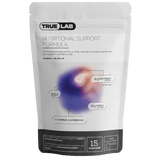
True Lab — Specially for GLP-1 diets
Slimming Anti-Deficiency Supplement
37,90 €
Discover the supplement →What the 2026 figures really reveal
This year's statistics paint a contrasting picture. According to data collected by the National Institute of Public Health in January 2025, around 28% of French people who embarked on a weight loss programme in 2024 opted for a high-protein approach, compared to 19% in 2020.
Short-term effectiveness appears to be confirmed: across a panel of 1,200 people followed for three months, the average weight loss reached 5.8 kg with a high-protein diet compared to 3.2 kg with a standard balanced diet, at an equivalent caloric deficit. But let's dig deeper.
At twelve months, the gap narrows considerably: 7.4 kg lost versus 6.1 kg. Why? Because the sustainability of the diet plays a major role. The drop-out rate stands at 47% for strict high-protein diets compared to 31% for moderate approaches. The frustration caused by dietary restrictions eventually takes over.
One figure is particularly striking: among those who maintained their weight loss two years later, 68% had incorporated protein in a moderate way (1.2 to 1.5g/kg) rather than to an extreme degree. Moderation would therefore appear to be more rewarding in the long term.
The seven most common mistakes to absolutely avoid
Having supported hundreds of people, certain mistakes come up time and again. The first: neglecting hydration. Protein metabolism produces more waste to be eliminated. Aim for a minimum of 2 litres of water per day, more if you are active.
Second pitfall: cutting out carbohydrates completely. Your brain consumes 120g of glucose daily. Too low an intake leads to fatigue, irritability and reduced concentration. Keep at least 100g of complex carbohydrates per day.
Third mistake: forgetting healthy fats. Your hormonal system needs them to function properly. Incorporate olive oil, avocado, oily fish and nuts. A woman who cuts out too much fat risks disruption to her menstrual cycle.
Fourth problem: always eating the same proteins. Variety ensures a complete spectrum of amino acids and nutrients. Alternate between meats, fish, eggs, dairy products and plant-based sources.
Fifth pitfall: neglecting physical activity. Protein alone is not enough to sculpt your figure. Strength training stimulates protein synthesis and maximises the use of the protein you consume. Two to three sessions per week make all the difference.
Sixth mistake: relying solely on the scales. Weight doesn't tell the whole story. Take your measurements and observe how your body composition evolves. A kilogram of muscle takes up less space than a kilogram of fat.
Seventh and final mistake: ignoring warning signs. Persistent fatigue, recurring digestive issues, pronounced bad breath (a sign of excessive ketosis) should put you on alert. Seek advice promptly.
Your personalised action plan for getting started with confidence
Start by assessing your starting point. Calculate your current protein intake over three typical days. Most people consume between 0.8 and 1g per kilogram, i.e. 56 to 70g for a person weighing 70 kg.
Increase gradually towards your target over two to three weeks. A sudden change often causes digestive discomfort. Add 20g of protein per week.
Choose your battles: there's no need to overhaul everything at once. Perhaps start by enriching your breakfasts? Swapping your coffee and toast for an omelette or fromage blanc with fruit and seeds already significantly changes your daily profile.
Plan your shopping and prepare certain foods in advance. Cooking a large batch of chicken, hard-boiled eggs or legumes on a Sunday greatly simplifies the organisation of the week ahead. The logistical challenge remains a major obstacle for many people.
Our high-protein programmes
Everything is ready to consume — no weighing, no calculating
When to sound the alarm and seek advice
Certain signs are unmistakable and require prompt medical attention. Swelling in the legs may indicate kidney overload. Unusual fatigue despite rest may suggest a deficiency in iron or B vitamins. Disruption to the menstrual cycle in women often signals an insufficient total energy intake.
A personal or family history of kidney stones calls for extra caution, as a high protein intake increases the urinary excretion of calcium and uric acid.
Beyond the diet: building a healthy relationship with food
Let's talk about what is rarely discussed: the psychological aspect. Any diet, whatever it may be, can become obsessive. Weighing yourself every morning, counting every gram of protein, turning down invitations for fear of "giving in"... These behaviours signal a drift.
Protein helps to regulate appetite, certainly, but it doesn't resolve the mechanisms of comfort eating or emotional eating. If you eat primarily to manage stress, boredom or sadness, a high-protein diet will not solve the underlying problem.
A balanced approach incorporates flexibility. Eating 120g of protein on some days and 90g on others won't undo your progress. Consistency matters more than absolute perfection. This notion of "energy balance over the week" rather than "daily perfection" considerably reduces stress and improves long-term adherence.
Ready to take action? Start by getting to know your profile:
📊 Calculate my BMI 🥩 Calculate my protein needs
Then choose your programme according to your goal:
7-day programme 14-day programme 28-day programme ✦
Everything is ready to consume, with no weighing or calculating.
Reliable resources for further reading
To go further with scientifically validated information, several sources are worth your attention. ANSES regularly publishes reports on recommended nutritional intakes and the risks associated with dietary imbalances. The World Health Organisation offers general guidelines on nutrition and health.
For recent scientific publications, PubMed remains the reference, with thousands of studies on protein metabolism and weight loss. Prioritise meta-analyses and systematic reviews that synthesise multiple studies rather than individual studies in isolation.
Bear in mind that no article, however in-depth, replaces personalised support. Your medical history, your daily constraints and your personal goals require an expert eye to build a strategy that is truly tailored to you.
High-protein diets work for many people — that is undeniable. The 2025 data confirm this. But their effectiveness depends as much on how they are implemented as on how well they are adapted to your unique profile. Between dogmatism and laxity, find your own balance.


